喜多庄兵衛 SHOBEE
16Z Orizuru(Paper cranes)
16Z Orizuru(Paper cranes)
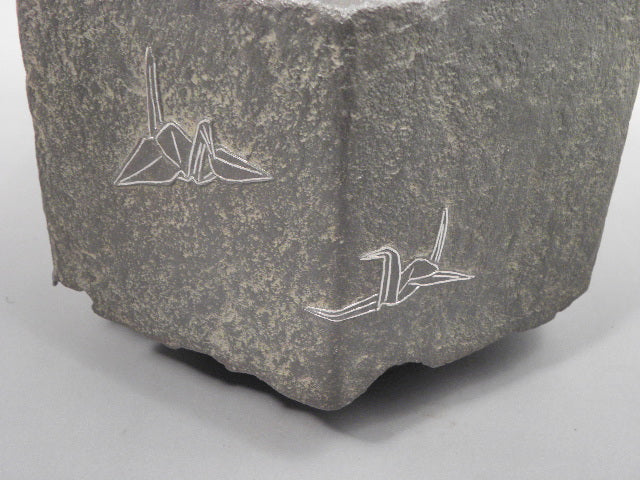
Hexagonal small iron bottle. The flat six faces that form the tail of the tail toward the hem associate the surface of the paper like the broken of the hem. The five cranes that are cast on the surface are contoured by imputation of the dense silver wire, and the straight line of the fold releases the light.
There is a scene in which the appearance of origuru appears in Japanese literature in "KOSHIKI ichiroyo" by Saikaku Ihara published in the Edo period in 1682, where the main character, nonosuke made "the shape of the bird of the elbow", but there is no figure or picture, and it is the description of only sentences. After that, around 1700, a design picture of kimono is called "hiragana", but it appears as a design for the first time here.
In 1797, the world's oldest origami textbook, 'the secret book of chiharetsu Tsuru' was published, and it seems that 'origami' permeated the common people as a culture to enjoy the folding of the paper from around this time.
In Japan, there is a desire for longevity and peace. Since ancient times, it is said that "crane lives for 1000 years", and it has been used as an auspicious bird used for the celebration of the wedding and the long life. In particular, there is a custom of sending Senkaku no Tsuru to hospitalized patients with the hope of healing.
It is an excellent thing to use for the health and the peace of the people who take the tea from the same bottle with oneself, and hope to be healthy.
SPEC
| Size | H22 x W17.6cm |
| Body weight | 2100g |
| Packing weight | 6100g |
Couldn't load pickup availability
Share